
St. John Parish's Official Arrest Archive
The SJSO Arrest Reports archive is the parish's official multi-day blotter. Posts carry a day or date range in the title. A Sept. 1 report went up Sept. 2, and an Aug. 28 through 30 report bundled three days at once. Individual weekday posts fill the gaps between these. Older entries sit deeper in pagination. The Zuercher roster answers a different question. The log keeps a dated published snapshot, while the roster shows who may be in custody now.
A report's stated range governs what it claims to cover and nothing more. It does not fix the incident date, intake time, or posting time for each entry. Warrants, detainers, and rebooks often point to earlier events. So read the label beside the charge text. Not every line marks a new offense.
The official archive navigation sits on the sheriff's crime-and-arrests page, listing each dated report link.
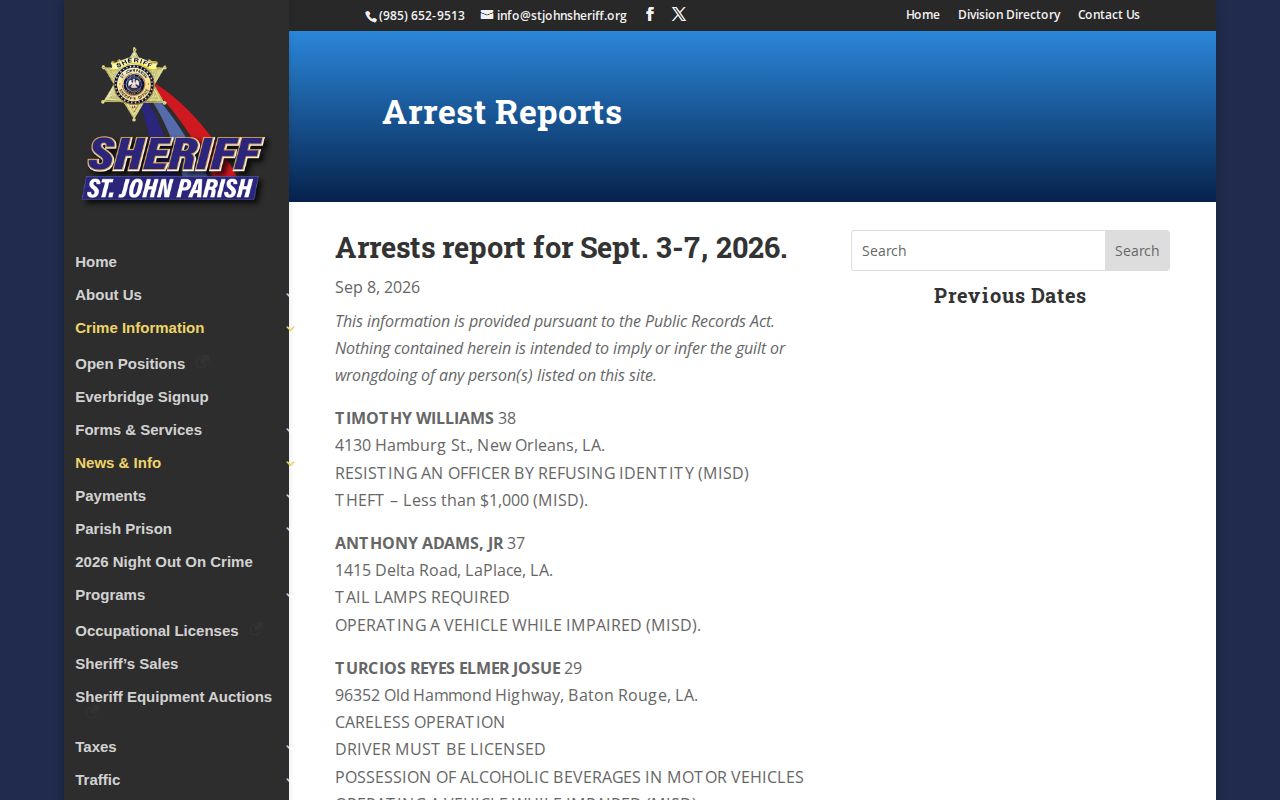
The dated links and older-entry pagination help with a period search. They do not turn the page into a certified, complete history of parish arrests.
Read a St. John Arrest Report
Pick the post whose title names your date. Keep the report window apart from the publication day. When an arrest falls late at night, before a weekend, or near a holiday, search the surrounding dates too. The wording of each entry also hints at why a person was booked.
- Open the official archive and select the post whose stated date or range includes the expected booking.
- Read the whole entry, including “rebook,” “detainer,” “hold,” “warrant,” and the agency when shown.
- Compare the listed age and city or address cautiously to avoid confusing people with similar names.
- Check the live roster when the question is current custody rather than past publication.
- Use the Clerk or 40th Judicial District Court for disposition because the log stops at charges.
Today's intake picture keeps shifting. The 24 Hour Arrests page explains how to filter the roster by arrest date. The two sources need not match line for line, since one shows live custody data and the other is a dated post.
Fields in the Parish Arrest Log
The SJSO report entries run as compact text. They mark a published booking event but skip fields the live roster or a court record would carry, so never guess at an omitted value.
| Report element | What the post provides |
|---|---|
| Name | Public name when disclosure is allowed; juvenile entries may be anonymized. |
| Age | Age in the report, not a promised date of birth. |
| City or address | Location text tied to the entry, not proof of incident location. |
| Charge, warrant, or hold | Intake language that may include labels, detainers, and rebooks. |
| Report window | The day or grouped days named by the sheriff. |
| Usually absent | Booking number, release date, bond field, disposition, and photo column. |
The SJSO reports are text blotters. No mugshot gallery comes with them. A booking photo may surface in a news story or the live roster, but that image is not part of the report. The log also stops short of the courtroom. It cannot confirm what a prosecutor or judge later did with a charge.
Note: A held-for-agency or detainer line describes a custody relationship, not a new charge on its own.
Why Parish Weekend Arrests Appear Together
SJSO publishes on a weekday rhythm. Single-day posts appear through the workweek. Weekends and holidays get bundled into one report instead. The clearest local example is the Sept. 3 through 7, 2026 report, posted Sept. 8 after Labor Day, a batch spanning five days. Expect one post per weekday, not per calendar day.
The official grouped report is preserved in this capture:
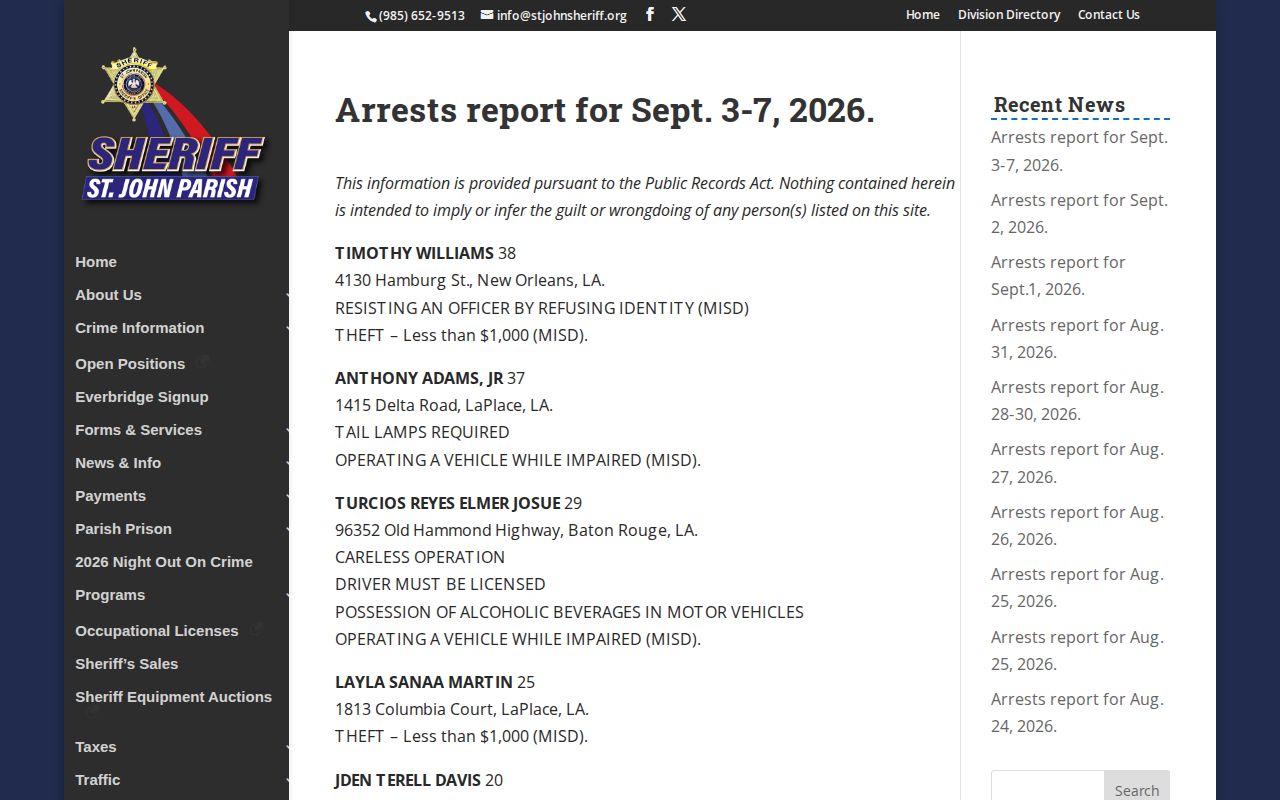
The date range and the batch pattern go together. A weekend group is not a crime trend. Line counts reflect the window's length, plus rebooks, warrants, detainers, and the workday publishing schedule. The sheriff's annual report keeps bookings separate from calls for assistance, drug arrests, DWI arrests, and accidents. Those categories do not swap. No short blotter sample can show whether parish crime rose or fell.
Local News Is Not the Parish Blotter
L'Observateur has long run St. John Parish arrest reports built on date ranges. The paper now adds selected crime stories too. Regional stations like WDSU and WAFB jump on notable arrests, and SJSO's press-release category adds official narratives for chosen cases. None is a complete daily roster. An older L'Observateur date-range report shows that period format:
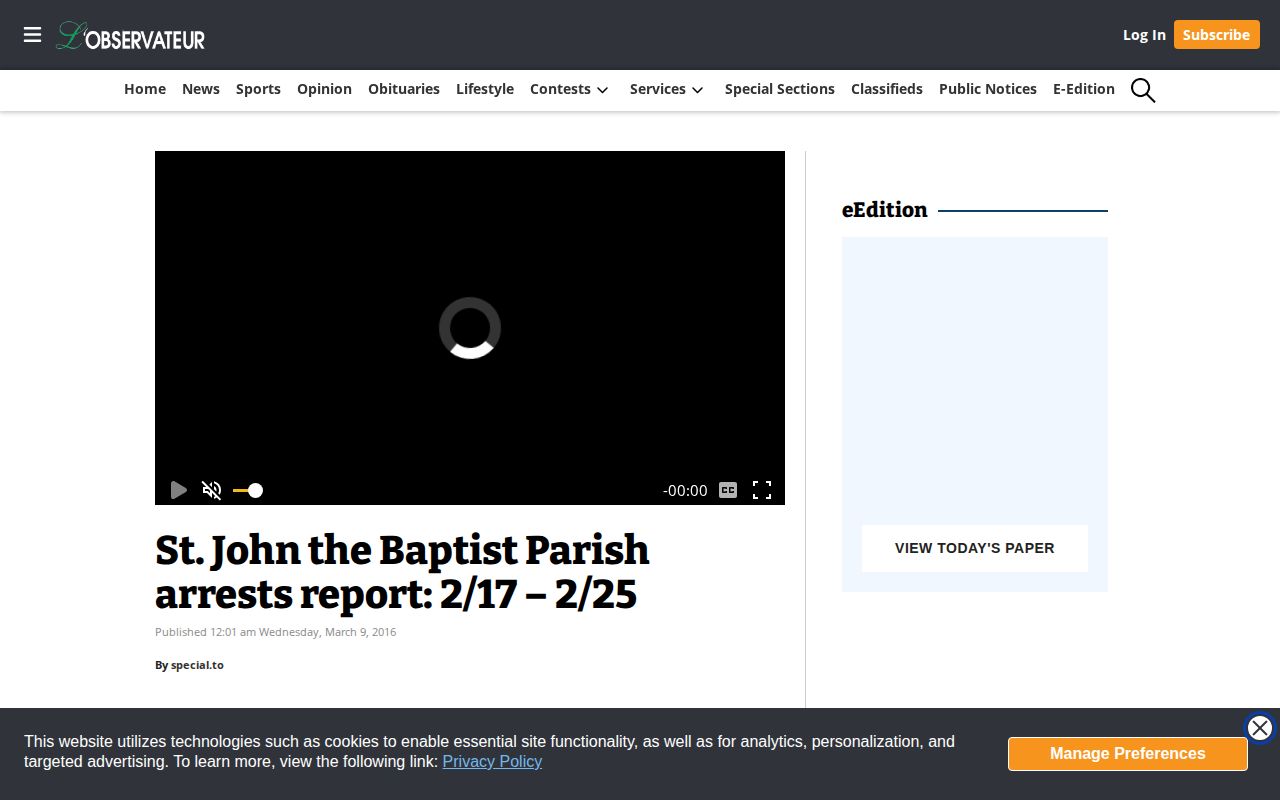
The article shows the period format news offers. Current status still rests with the sheriff. A story may carry an agency image, an evidence photo, or nothing at all. Routine bookings often get skipped. Attention concentrates on LaPlace or whichever community an incident touched. Use stories for context, then match the name and date against SJSO and the court record. A headline is not a disposition.
Unofficial St. John Arrest Archives
Commercial pages mirror parish booking data too. RecentlyBooked, Busted Newspaper, Mugshots.com, Arrests.org, Mugshots.zone, and Arre.st have all carried St. John sections. Their date ranges, agency labels, photos, bond fields, and archive depth vary widely. An entry can linger after release. A correction may never appear. Some sites merge sources or credit an arrest to an agency other than SJSO.
Official sources should lead the way. Use the sheriff archive for the dated publication, the roster for current parish custody, the Clerk and court for a disposition, and Louisiana DOC only after a transfer or state sentence. An unofficial page can hint that an old record exists. It cannot settle current status. Never treat a third-party image as sheriff-certified.
Note: A third-party timestamp describes that publisher's process, not the sheriff's intake time or the court's final action.
Finding Older Parish Arrest Records
Older St. John the Baptist Parish arrest material has a few homes. The WordPress archive holds indexed SJSO reports going back years, with month-by-month navigation for digging. The office keeps no promise about its web posts. Not every past page stays online. A vanished web page is not a destroyed booking file. The same goes for the roster. Its "In Custody On" filter only reaches back 30 days. That limit sits in the interface, not in parish retention law.
When an older arrest window is missing, call SJSO Records at (985) 359-8873. Or follow the official public-records instructions. Give the person's name and the rough booking date, plus the record you want and the agency involved. Ask which retention schedule governs it. No parish schedule promises how long booking photographs or web posts stay up.
Louisiana R.S. 44:36 sets a floor of three years when nothing else requires longer. That is retention, though, not permanent online access. Court filings may live on separately with the Clerk of Court. State Archives matters only if a record series was moved there. No SJSO booking-photo series was transferred.
The Arrest Log Is Not a Verdict
Every SJSO arrest-report entry opens with the facts logged at booking. Prosecutors can amend, decline, or dismiss a charge afterward. Courts can release the person, take a plea, acquit, or sentence. None of that appears in an old blotter line.
The sheriff's reports carry their own published disclaimer. Keep that context in mind with old entries, especially ones echoed by news outlets or unofficial indexes. A dated post shows only that SJSO published a booking entry for that window.